
Trust, Power and Communities: An Away Day Conversation at ICC
By Samantha Jury-Dada, Director
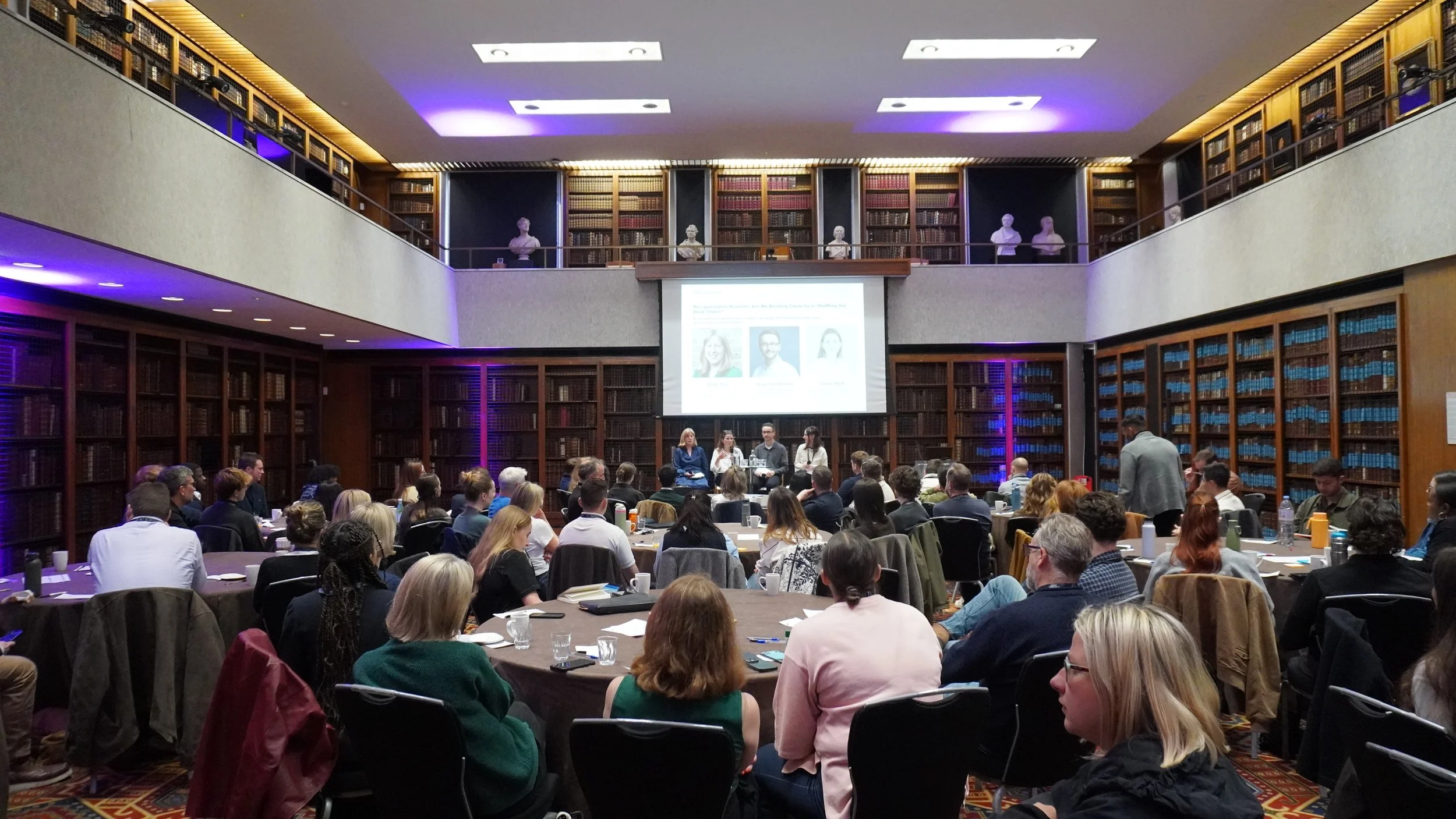
A company away day is always a useful time to look at things differently. Setting aside laptops and the usual daily deadlines, ICC staff gathered recently to consider what others had to say about one of the hottest topics in our work: LGR and Devolution. An expert panel explored what many are questioning in public services – whether LGR will translate into tangible outcomes for people and communities.
Titled ‘Reorganisation roulette: are we building capacity or shuffling the deck chairs?’ the panel discussion featuring Jillian Kay (Southampton Council), Grace Wyld (Future Governance Forum) and Stuart Hoddinott (Institute for Government) made clear that the reorganisation of local government, the NHS and devolved bodies is not taking place in a vacuum. The context of low trust in public institutions, high demand for costly services and fragile finances makes it even more important, and also a lot harder. The session made clear that this reorganisation will only matter if it changes how the state relates to people and builds trust, not just how organisations relate to each other. As one panellist put it: “Devolution cannot just be a tidying up exercise – it is a national renewal.”
Seen this way, LGR is not primarily an organisational reform, but a trust intervention. Rebuilding trust in public services should be a design outcome for anyone leading reorganisation efforts. And the clearest way to start making that happen is to develop a clear theory of change with communities and partners that is accessible to those working within the organisation. Reorganisation will be a success if it resets purpose and behaviours and brings new players into the ecosystem rather than relying on a foundation based previous partnership iterations.
At ICC, we believe that if done properly, LGR will go beyond consolidation to renewal – inclusive growth, wellbeing, prevention and restoring trust. To do this, there are three shifts that we recommend public services should make:
1. Move from structures to purpose
Our missions work with New Local has highlighted the value of moving away from service siloes and into mission delivery powered by multi-disciplinary teams. The ability for leaders to step away from following a process driven LGR/Devolution pathway and into a values and mission driven approach will be challenging and resisted by parts of the system but it is critical.
2. Move from delivery ‘to’ to delivery ‘with’
The most powerful movements created in the public sector are community powered, where the impact of community organisations is valued as a key part of the prevention eco-system and there are high levels of trust between the public sector and the people it serves.
3. Move from compliance to learning
Failure in the public sector is difficult and visible, which often drives risk aversion. But fear is the enemy of a learning environment. Organisations that can rebuild trust can create the conditions for thoughtful risk-taking, creative problem-solving and shared learning across organisational boundaries. This, rather than defaulting to compliance and control, is a defining characteristic of a well-functioning public service system.
ICC collaborates with public sector organisations across the country at varying stages of maturity to develop and implement operating models that restore trust and unlock community capacity to drive impact for people and place. The reimagining of local and regional government provides a once in a generation opportunity to do this at scale. Reorganisation will succeed when it produces a state that people can believe in again — one that leads with purpose and creates space to learn.