
Britain Renewed: Reflections on Public Service Reform
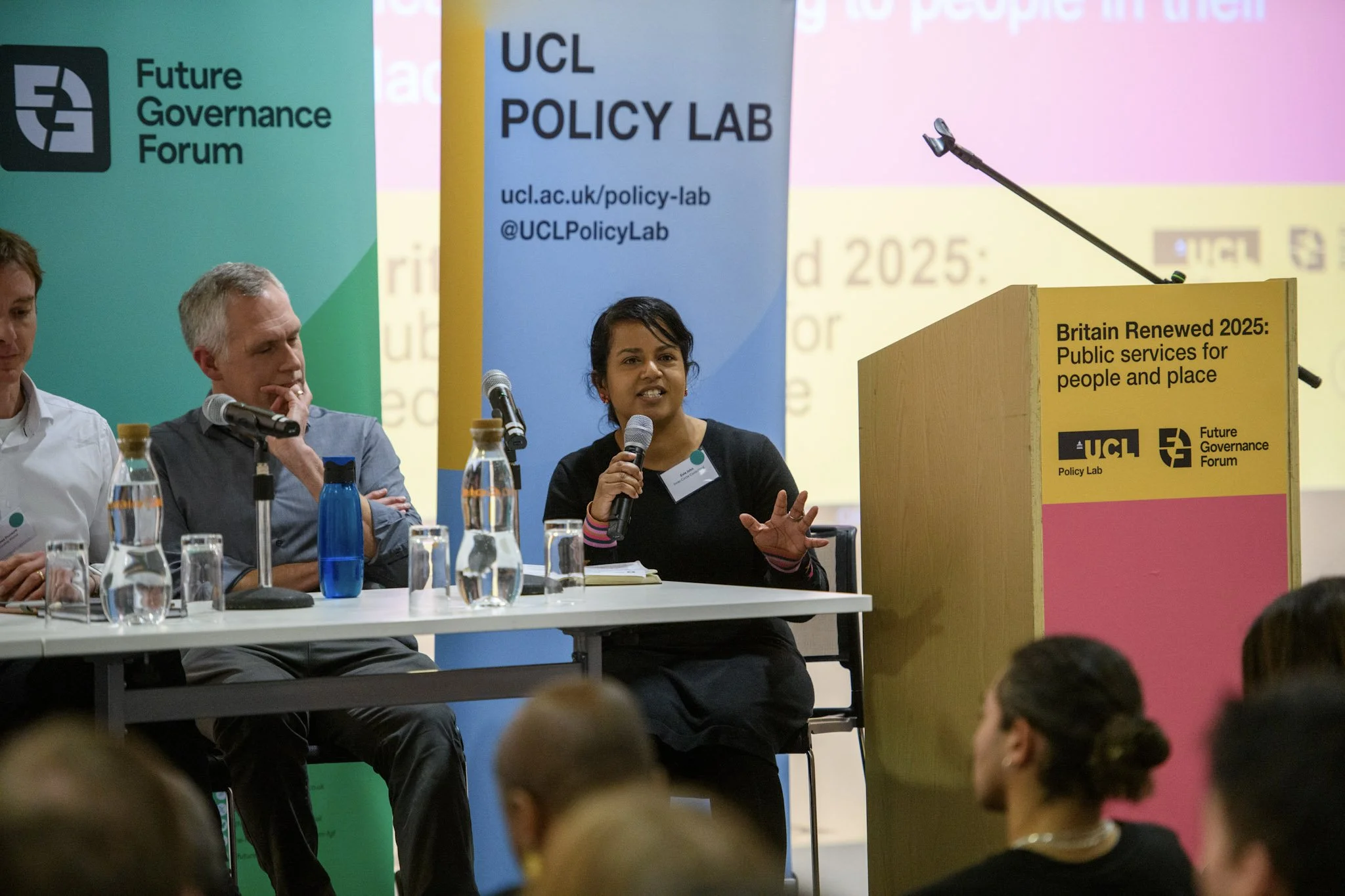
By Evie John, Managing Director, Inner Circle Consulting
Everything, everywhere, all at once.
No, not a review of the 2022, Oscar winning, genre-bending, Hollywood movie. Instead, the summary of a vital movement of public service reform that seeks to connect the energy, effort and commitment of those innovating and learning on the ground with those innovating and learning through design. A movement that consciously ignores long-held practices of top-down decision-making, linear methods of change, and grid-obsessed communication and instead seeks to shift power from the centre to local areas, from institutions to people, from organisations to places.
At the Britain Renewed conference, where ICC teamed up with the Future Governance Forum and UCL Policy Lab, we discussed this kind of public service reform. There was a palpable feeling that to go from policy imagination to observable reality, everyone needed to show bold intention, strive for change, and maintain open dialogue with all places and all people. Josh Simons MP, in his opening comments, set it out early: a commitment to disruption and impact that was compelling, direct, and “brash”. Simons spoke of making a positive impact on people’s lives through the quality of their neighbourhoods, and the type of opportunities that they can access. His speech was human-centred in its call to serve people but also combative in its demand for a change that communities might actually feel and recognise.
This was the kind of storytelling that the audience of committed public service reformers needed, and as a number of people reflected, the kind that had the potential to resonate with the wider public. On the panel I chaired about storytelling, it became abundantly clear that we need a narrative for public service reform that unifies and engages, that both listens to and speaks to citizens, that mobilises all actors, and sticks beyond political cycles; a narrative that makes people feel things. Government could do well to coalesce around this kind of narrative as it confronts a wave of populism fuelled by blame but lacking in answers.
As a firm, we at Inner Circle Consulting continue to challenge ourselves on how we think about the goals of public service reform in the work that we do and the ways we engage public servants.
Below is our video of the day, and some more reflections from some of our team on what the event means for us.
Britain Renewed: Lessons on Scaling Local Government Innovation
By Chloe Carter, Managing Consultant, Inner Circle Consulting
There’s a real desire for us to be more powerful, more relational and therefore more able to respond to the needs of our communities, where trust feels more broken than ever in systems and in outcomes. Place is where trust is built or broken and is the optimal place to pilot new ideas and scale where it works.
The Britain Renewed Conference offered some very timely conversations and reflections on how to explore public service reform. Central government’s Test, Learn and Grow (TLG) programme is starting to do just that, and I’ve seen first-hand the benefits of commissions like Pathways to Work in key areas across the UK that respond to health and socioeconomic challenges and inactivity levels with a real place focus.
Having spent a good chunk of my career in the tech, digital and customer space, the TLG mindset really resonates with me, offering agile ways of working that test early, learn quickly and grow only what delivers value. Local government already does elements of this, but there’s an opportunity now to apply the discipline of TLG more intentionally, especially given financial pressures, legacy systems and rising expectations faced by councils. It can offer the ability to test assumptions before committing scarce resources, to learn rapidly with real users, and to grow only what’s proven to work, reducing risk and increasing value.
Not everything has to work, and - as Nottingham County Council said at the conference in their insights – there is helpful learning in the three things that 'didn’t work’ just as much as the one that did; and the three that didn’t work don’t have to mean wasted effort.
The grow stage is where councils often hit hurdles - with short funding cycles, siloes, limited capacity, and the challenge of scaling across diverse local contexts. Testing and learning happen, but the grow element can stall. This is because growth needs structure and shared power. Learning and scaling requires relational trust, not just good prototypes.
Scaling isn’t just a process, nor just something to be governed. It is something that needs to be worked through with communities rather than delivered to them. Growth accelerates when residents, partners and services feel ownership. Frontline services repeatedly tell us – as they did again at the conference - that the bottom-up bit is working. But the top needs to listen and do more. This is hard given the ‘get it right first time’ mindset that dominates local government. But TLG principles offer the chance for communities to see those in power leading with honesty about the fact they may not know how to exactly get it right, but are committed to testing, learning and growing with communities to do what they can to get there.
That rebuilds the trust, even if it’s a journey to the solution.
Finally, what works in one place won’t necessarily work elsewhere. Growing solutions isn’t about simply repeating, but about strengthening the underlying principles in ways that make sense locally. TLG principles offer local government a powerful framework to de-risk change and build more relational, community-shaped services. Getting the “Grow” part right - locally, structurally, culturally and in partnership - is where the real difference lies.
Britain Renewed: Restoring the Story of the System
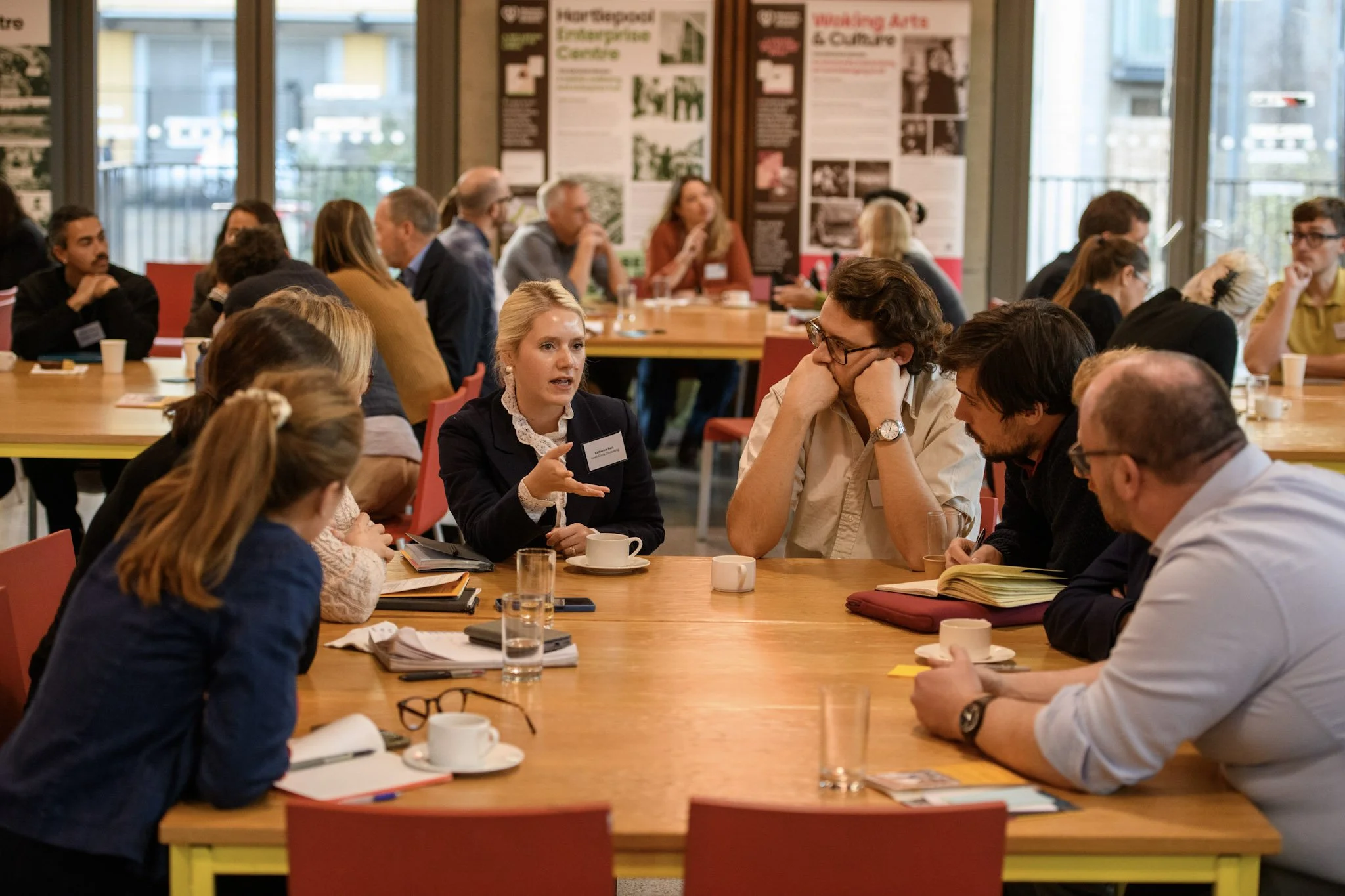
By Katherine Reid, Senior Consultant, Inner Circle Consulting
Public service reform has become a familiar refrain. Political cycles promise renewal but the transformation required never quite arrives. What is missing is not effort but meaning: We forget why institutions were built in the first place. Without that story of ‘why’, reform is a technocratic exercise instead of an act of national imagination.
This loss of a shared national narrative has consequences - we are left with discordant stories of dysfunction. One of monolithic, broke public service governed by thresholds, rules and risk. One of distrusting families caught between assessments, referrals and waiting lists. One of public servants carrying the moral load as they work with skill and resolve despite the prevailing system. It makes a stark contrast to the shared belief of the twentieth century that Britain’s public institutions were part of a collective investment to strengthen the nation.
A new story is needed. The state is not a collection of organisations but a social ecosystem held together by trust, expectations and cultural norms that shape how people understand fairness and responsibility. These forces are now under strain. When trust weakens, relationships fray, institutions hesitate and the system loses the coherence that allows it to act with confidence. Any serious reform effort must begin with this recognition.
The discussions at Britain Renewed recognised that the state is at its strongest when it strengthens the ability of people and places to act. When it can place trust, dignity and agency at the centre of public life, and see communities not as recipients of services but as contributors to the country’s shared progress. It would frame public services as part of a wider civic ecosystem, one that supports security and opportunity in equal measure. Above all, it would give Britain a sense of direction that speaks not only to what must be repaired but to what can be built.
Our gathering also recognised the positive: Britain retains substantial civic assets. Local government holds deep professional knowledge. Civil society organisations bring insight, innovation and social capital that policy cannot manufacture but can strengthen. Communities sustain networks of care and resilience that remain underused by the formal system. These capacities are the living infrastructure of national renewal and their shared story can give public institutions their authority and bind citizens into a common endeavour.
Reform succeeds when people can recognise themselves in the story of the nation, when institutions feel connected to public purpose rather than distant from it. Britain Renewed offered clarity about where we stand, alignment around where we hope to go and legitimacy for the decisions required to get there. What we all recognised in our dynamic day together was that public service reform is not the system itself, but the means by which Britain chooses what kind of future it wants for everyone.
Want to join the movement? Can we help? Contact us here:
Evie John - [email protected]
Chloe Carter - [email protected]
Katherine Reid - [email protected]